Efficient prediction of the processing and structural properties of recycled fiber-reinforced thermoplastics in the circular economy
ProgRec develops methods for the reliable prediction of the properties of recycled fiber-reinforced thermoplastics. This enables high-quality recycled plastics to be used in safety-critical applications, for example in the automotive sector. A digital calculation tool represents the central project outcome.
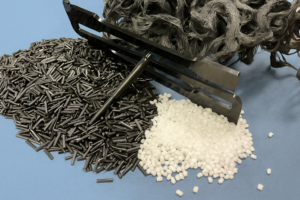
With the aim of increasing the reuse of plastics in the automotive sector, the revised EU End of Life Vehicles Directive requires a recycled content of at least 20 % in new vehicles. One quarter of this is intended to come from end of life vehicles. OEMs typically pass these quotas on to suppliers without any compromise in functionality, quality, or reliability. However, additives, complex material histories, and contamination make it difficult to use recyclates in technical applications. In addition, there is still limited validated knowledge about material changes in circular use, property prediction for recyclates, and the design of mechanically loaded lightweight structures made from recycled plastics.
For the development of lightweight structures, virgin materials are comprehensively characterized and represented through material cards in structural and process simulations. The time and cost required for this approach is hardly compatible with batch changes and property fluctuations typical of recyclates. As a result, to meet the Directive targets, recyclates are currently used mainly in non structural parts made from low cost commodity plastics. The fiber reinforced technical thermoplastics that are more valuable both ecologically and economically therefore cannot yet be fully leveraged for a circular economy.
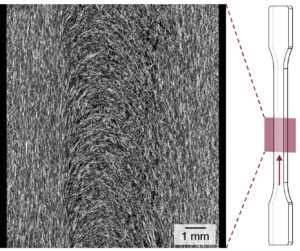
The project ProgRec aims to develop methodological know how to enable the reliable and robust manufacture of fiber reinforced plastic components in vehicles using recycling materials from end of life vehicles with predictable performance. First, the available material streams of unreinforced and fiber reinforced plastics (polypropylene, polyamide) from end of life vehicles and the expected range of properties will be analyzed qualitatively and quantitatively. Experimental studies will then systematically generate knowledge on the interaction of aging, reprocessing, material composition, and the properties of fiber reinforced thermoplastics in circular use.
A key element of the project is a novel computational tool that derives material parameters and functions for rheological and mechanical material cards from simple baseline tests, enabling a fast and reliable prediction of the complex material behavior of fiber reinforced recycled plastics. Predictive capability will be demonstrated in a practical circular scenario using a structural vehicle component with an optimized recycled content. Based on the results and accompanying life cycle and cost analyses, potentials will be identified and further measures to improve the circularity of fiber reinforced plastics in vehicles will be developed.