Aluminium is the most abundant metal in the Earth’s crust. As a soft and very light metal, it is easily malleable and is used, amongst other things, in lightweight construction and packaging.Aluminium oxide is hard and temperature- stable. It is often used for abrasives, bone substitutes, melting pots and watch glasses and a variety of other applications. Aluminium oxide is a proven remedy for heartburn: it helps to balance stomach acid.
How can I come into contact with this material?
@ Mdv Edwards-stock.aobe.com
Aluminium occurs naturally in small quantities in many foods. In addition, it can leach into food from packaging, tins, cling film or cookware – particularly in acidic or salty foods such as tomato sauce, fruit, sauerkraut or marinades. Aluminium is also found in some antiperspirants and medicines, such as antacids.
Aluminium dust can be generated during grinding, welding, milling or aluminium production and may be inhaled.
When used as an abrasive (e.g. in sandpaper, where it is usually referred to as corundum), aluminium oxide can produce dust that may be inhaled. It is therefore advisable to wear a respirator and/or use an extraction system.
Is there any risk from this material to humans and the environment?
Aluminium is not normally absorbed through intact skin upon contact with objects, packaging or jewellery. The tolerable weekly intake (TWI) has been set at 1 mg/kg body weight.
Aluminium oxides are among the less hazardous substances. They are only toxic in large quantities.
Conclusion
Aluminium has no natural function in the human body. In everyday life, the human body comes into contact with only small amounts of aluminium oxide (nano)particles; consequently, there is no risk to health.
Aluminium is a silvery-white light metal. When exposed to air, a thin, protective layer of aluminium oxide forms on its surface, making the metal corrosion-resistant. Aluminium is an excellent conductor of heat and electricity and can be rolled into thin sheets to make aluminium foil. As pure aluminium is soft, it is usually combined with other elements in technical applications to form high-strength aluminium alloys.
Applications include lightweight construction in aeroplanes, trains and cars to save fuel, use in the packaging industry (drink cans, tinned food, etc.), window frames, façade elements and doors, and it is used for overhead high-voltage power lines. Alloys can be used in foundry applications or as metal powders for additive manufacturing (3D printing) of metallic components. In the food industry, aluminium is designated as food colouring under the name E 173. It is used to decorate baked goods and as a coating for confectionery.
Compounds of aluminium (Al) with oxygen (O) are known as aluminium oxides, whilst compounds containing OH groups are known as hydroxides. Aluminium oxides (Al2O3) occur in various forms; one of the best-known and most important is alpha-Al2O3 (corundum). In addition, there are a number of other aluminium oxides with different structures, known as transition aluminas. Corundum has a density of 3.98 g/cm³, high hardness, a melting point of 2053 °C and a high specific electrical resistance of approximately 10¹² Ω·m (at 20 °C). It is chemically very stable and virtually insoluble in water, acids and alkalis, whereas, for example, the transition alumina gamma-Al2O3 dissolves in strong acids and bases. Due to its high surface activity, gamma-aluminium oxide is used as an adsorbent and catalyst material.
In addition to the oxides of aluminium, various hydroxides also occur. These include the aluminium hydroxides [Al(OH)3] – bayérite and gibbsite – as well as the so-called aluminium oxyhydroxides [AlO(OH)] – boehmite and diaspore. Gibbsite, boehmite and diaspore are components of bauxite, the most important aluminium mineral in industrial terms.
Due to its high hardness, corundum is used as a bearing stone in watches and as an abrasive and polishing agent for gemstones, metals and silicon wafers. When mixed with binders, particularly other oxides, corundum powder is processed into crucibles, bowls, protective tubes, electrical insulators, joint replacements (artificial hip or knee joints), dental ceramics, burner tubes, catalyst supports, wear protection, armour, furnace linings and tools for the forming and machining of metals.
Although corundum is hard and brittle, it has low toughness. To increase its toughness, partially stabilised zirconium oxide or titanium carbide (‘black ceramic’) is added to white corundum for various applications. The low electrical conductivity and high dielectric strength of aluminium oxide are utilised in the manufacture of insulators and spark plugs.
Synthetic corundum crystals are grown from corundum melts and exhibit high hardness, transparency and scratch resistance. The gemstones sapphire and ruby are forms of corundum with small additions of iron/titanium and chromium respectively; when produced synthetically, they are used, for example, in lasers. Sapphire is used, for example, as scratch-resistant watch glass. Sintered corundum can take on a wide range of colours through the addition of small amounts of foreign substances.
Boehmite and other aluminium oxides are used in the petroleum and chemical industries as catalyst supports and adsorbents due to their thermal stability. Nanoscale aluminium oxide, sintered into porous structures and applied to a coarser-textured support, can also be used for nanofiltration.
Aluminium hydroxide [Al(OH)3] in powder form is used as a flame retardant and as a filler in carpets, rubber, plastics and foams. It is also used in toothpastes and cosmetics.
In general, aluminium oxides and hydroxides are used in the paint and plastics industries as thickeners and fillers, and are also employed to reduce stickiness and increase scratch resistance. They can also have a positive effect on the colour brilliance of paints and varnishes.
Aluminium oxide, in the form of a nanometre-sized powder, is not self-igniting. Even as a finely dispersed mixture with air (dust) in the presence of an ignition source, aluminium oxide is not flammable; therefore, there is no risk of a dust explosion.
Further applications comprise:
ceramics: to ensure high abrasion and fire resistance
additives for paper manufacture: to avoid that the paper adheres to the feed rolls during high-speed processes
artificial precious stones such as sapphires or yttrium-aluminum garnets: the latter of which are used, for example, in high-energy lasers
luminescent substances and phosphors with aluminum oxides as substrates
Chemical industry and catalysis: as a stable and porous support structure for catalysts
Occurrence and Production
Aluminium oxide is produced on an industrial scale from the mineral bauxite. Global bauxite reserves are estimated at approximately 30 billion tonnes, whilst annual global production amounts to approximately 400 million tonnes (as of 2023). Australia and Guinea are among the countries with the largest bauxite reserves and the highest production volumes worldwide.
A blue sapphire @ byjeng-stock.adobe.com
Sapphire is the most beautiful, but also the rarest, form of aluminium oxide and is known as a gemstone.
Aluminium oxide is produced using the Bayer process, in which bauxite is crushed, dried and dissolved in concentrated caustic soda. The impurities – iron, silicon and titanium – are separated out in what is known as red mud. Aluminium hydroxide is precipitated from the solution and calcined at 1200–1300°C to form Al2O3. To produce aluminium, the aluminium oxide is reduced to liquid aluminium in a process known as fused-salt electrolysis. The largest producers of primary aluminium are China, Russia, Canada and India. Aluminium recycling is also important; after separation from other metals and thermal pre-treatment to remove coatings, paints and other materials, the clean aluminium is melted in large smelting furnaces at temperatures of around 660–800 °C, cast into ingots and further processed in rolling mills.
Wefers, K and Misra, C (1987). Oxides and Hydroxides of Aluminum, Alcoa Technical Paper No. 19, Alcoa Laboratories, Pittsburgh, PA, 1987.
Petzold, A and Ulbricht, J (1991). Aluminiumoxid: Rohstoff, Werkstoff, Werkstoffkomponente, Dt. Verl. Für Grundstoffind., Leipzig, 1991. ISBN 9783342005322.
The raw material for aluminium production is the mineral bauxite. This is first converted into aluminium oxide using the Bayer process, and then into aluminium using the Hall-Héroult process.
Approximately 90 per cent of the world’s bauxite reserves are located near the equator. The largest volumes of bauxite are mined in Guinea, Australia and China. Bauxite lies close to the earth’s surface, so it is extracted using open-cast mining.
A distinction is made between primary aluminium, obtained from bauxite mining, and secondary aluminium, which is recycled.
Resource consumption during processing
The production of aluminium oxide and aluminium is very energy-intensive, as it involves high temperatures (950–1,300 °C). In addition, large quantities of water and chemicals are required.
Mining takes place on a large scale in open-cast mines and results in significant disruption to landscapes and ecosystems.
Safety
In the mining and production of aluminium, preventing the formation of explosive dusts is the most important health and safety measure. Nevertheless, bauxite dust in mining areas is leading to an increased incidence of chronic respiratory diseases amongst the local population.
High temperatures and molten metals pose a risk of accidents.
Emissions
The high energy consumption involved in bauxite processing results in high greenhouse gas emissions.
Aluminium production generates what is known as highly corrosive and toxicred mud, a mixture comprising, amongst other things, iron compounds, caustic soda and heavy metals. For every tonne of aluminium produced, between 1.6 and 3.5 tonnes of red mud are generated, which is difficult to recycle. Consequently, the sludge is often stored in artificial ponds or landfills.
The release of red mud has already led to serious environmental disasters in the past.
Social Aspects
Land use is intensive, as the bauxite deposits lie close to the earth’s surface and mining is carried out as open-cast mining. Open-cast mining necessitates resettlement and often destroys the livelihoods of those dependent on fishing and agriculture. This frequently leads to conflicts with the local population.
Bauxite mining frequently leads to water pollution and a drop in the groundwater level.
To ensure environmental friendly and socially responsible production methods, it is becoming increasingly important in the EU to pay close attention to the origin and transport of goods within the supply chain. The German Supply Chain Due Diligence Act requires companies with more than 1,000 employees to document or certify compliance with social standards and occupational health and safety requirements.
Disposal and recycling
Aluminium is regarded as the most recyclable metal. It can be recycled almost entirely without loss and an infinite number of times. However, this is only possible when recycling pure alloys. Aluminium oxides are often not specifically recycled, but are used, for example, as abrasives or in ceramics.
Around 75 per cent of all the aluminium ever produced is still in circulation today.
Recycling aluminium is significantly less energy-intensive than primary production, requiring only around 5 per cent of the energy.
How can the material be made more sustainable?
The use of renewable energy in extraction and processing could significantly reduce greenhouse gas emissions.
The social impacts of bauxite mining can be reduced by ensuring the local population is fairly involved in planning and in the creation of value. The environmental impacts of processing can be reduced through strict environmental standards, advanced filtration and retention technology, and a circular economy with significantly increased recycling.
Improved separation processes for the various aluminium alloys found in scrap metal can help to improve the quality of recycled alloys and prevent so-called ‘downcycling’. This also reduces the use of primary aluminium, as currently up to 50 per cent primary aluminium is added to scrap metal in order to meet quality requirements. (UBA Aluminium Factsheet 2019).
Aluminium is found in the form of aluminium ions as a natural component in drinking water and other foodstuffs, especially fruit and vegetables. Aluminium oxide particles agglomerate strongly, forming larger "particle clusters". In this form they are not very toxic to cells.
General Hazards
Aluminum-containing utensils for food storage or preparation such as kitchen utensils, cans or tins, foils or tubes from which the dissolved aluminum ions pass into the food may be additional sources of exposure. Moreover, aluminum compounds can be contained in gastric-acid neutralizers, so-called antacids, and in cosmetics and are used, for example, in roll-on deodorants due to their anti-perspirant effect. Compared to the uptake via food or antacids, the uptake of aluminum via utensils for food storage or preparation and cosmetics is rather low and amounts to clearly less than the uptake quantity that is assumed not to pose any health hazard according to an updated evaluation issued by the Joint FAO/WHO Expert Committee on Food Additives (JECFA, 2006).
Occupational-health studies of specific stresses and exposure in the aluminum powder industry have shown that finest aluminum powder can cause pulmonary fibrosis under unfavorable industrial-hygiene conditions. In Germany, the resulting disease which is referred to as aluminosis has been approved as such and workers have been recompensed for the related health problems since 1943 . The Senate Commission of the Deutsche Forschungsgemeinschaft has fixed the maximum admissible concentration (MAK-value) of aluminum oxides to amount to 1,5 mg/m3. Workers in the aluminum powder industry or welders in the automobile industry thus are required to wear suitable breathing protection.
So far, there is no scientific proof of a correlation between increased aluminum ion uptake from food including drinking water, pharmaceuticals, and cosmetics and the Alzheimer’s disease. Neither in dialysis patients nor in aluminum workers – both belonging to the groups of persons that are definitely exposed – were the Alzheimer-typical amyloid depositions in the brain observed in extremely many cases .
Studies on Living Organisms – in vivo
Within the project NanoCare, two different types of boehmite particles (primary particle sizes of 10 and 40nm) were scrutinized in in vivo studies. The experiments on rats that were made to inhale up to 28mg/m3 of the particles five days a week over a period of four weeks showed that inflammation of the lungs due to strongly agglomerated particles only occurred in the presence of the highest concentration. Moreover, enlarged macrophages and lymph node modifications were observed increasingly. Inflammations in the lungs occurred at inhaled particle doses of more than 1mg per lung. Similar results were obtained from instillation experiments carried out within the project. Instillation of more than 1,2mg of boehmite particles per lung in the respiratory tracts of the test animals caused damage to the lungs. In these studies, the NO(A)EL amounts to 0,6mg .
Studies Outside of Organisms – in vitro
Studies of Al, Al2O3, and AlOOH (boehmite) particles have shown that these particles tend to strongly clog and form agglomerates. These agglomerates can be taken up by the cells but are always found in vesicles, which means that they do not occur freely in the cells and are practically never detected in the cell nucleus. Studies of human lung cells have shown Al2O3 to have only small harmful effects on the cell division and cell vitality and have proved that even very high doses do not cause formation of harmful reactive oxygen species (ROS).
Aluminum oxide (Al2O3) which, for example, is used in orthopedic ceramics, has also been investigated for its genotoxicity. Very high doses were observed to have only minor mutagenic effects. Aluminum oxide fibers were found to be more genotoxic than nano- or micro-scale particles. Aluminium particles are more toxic than aluminum oxide particles. Only very high doses of Al2O3 can decrease the function of the mitochondria (only at or above 200µg/ml, the function of the mitochondria is reduced by 15%) and can cause (programmed) cell death of part of the cells.
Boehmite, an aluminum oxihydroxide (AlOOH), was studied within the NanoCare project. For the human lung cell line A549, a threshold concentration of at least 50µg particles per cm2 was determined. When the cells were treated with at least that concentration (LOEL) for more than 72hours, they were observed to become stressed while inflammation markers were produced. No effects were triggered by low doses of AlOOH in any of the different cell lines of different origins. Experiments on the mobility of nanoparticles across cell barriers (such as the air-blood barrier in the lung) showed that boehmite does not pass through cells. The barrier function of the cells is not influenced by the particles.
Using the so-called vector model which displays some of the elementary cell effects, partners of the NanoCare project proved that AIOOH particles are among the low-toxicity materials. Excessive, overloading concentrations of 60-120µg particles per 106 macrophages were observed to damage the cells but did not lead to the formation of harmful reactive oxygen species (ROS). Damage due to realistic doses of Al particles is not expected .
The element aluminum is found naturally in the earth’s crust (about 8,1 g/kg soil), and various aluminum compounds are components of soils and rocks. For nanoscale Al2O3 particles, there are no measured values for actual environmental concentrations.
From the amount of Al2O3 particles employed in different consumer goods, concentrations of 0,0002g/l in water and 0,01g/kg predicted in soil were predicted by computer models. In relation to the natural occurrence of aluminum in the soil and also to predicted environmental concentrations (PEC-value) for zinc oxide or titanium dioxide nanoparticles, these values are very low .
Inhalation of very fine aluminium oxide dust may cause inflammation of the lungs. In contrast to the lungs, the skin is a good barrier against particles. Aluminium occurs as a natural component, as aluminium salt, in drinking water and other foods, especially in fruit and vegetable.
Uptake via the Lung – Inhalation
Permanent exposure to aluminum oxides can cause damage to the lung. The related disease is referred to as aluminosis and is characterised by pathological changes of the lung that can be caused by chronicexposure to aluminum fumes or dusts, i.e. aluminum oxide particles from the aluminum oxide film that forms as the pure aluminum oxidizes immediately upon contact with air. Aluminosis belongs to the group of pneumoconioses and is an occupational disease subject to compensation. Workers in the aluminum powder industry or welders in the automobile industry are required to wear suitable breathing protection. Dust formation during aluminum powder filling/refilling should be avoided and optimum ventilation/extraction by suction should be provided. The maximum admissible concentration (MAK value) of aluminum oxides must not exceed 1,5 mg/m3 (respirable fraction) .
Uptake via the Skin – Dermal Uptake
Aluminium (aluminum salts) is used in roll-on deodorants due to its anti-perspirant effect. Al2O3 tested according to OECD Guideline 404 "Acute Dermal Irritation/Corrosion" in animal experiments does not cause irritations of the skin of animals. The maximum recommended daily aluminum ion uptake through the use of roll-ons is 7 µg, which is considered to be non-hazardous to health ..
Uptake via the Gastro-Intestinal Tract
In 1989, a tentative tolerable weekly uptake of 7 mg/kg weight was fixed for the total uptake of aluminum (ions) from food, including aluminum salts in food additives, by the Joint Expert Committee on Food Additives of the Food and Agriculture Organization of the United Nations (FAO) and the WHO (JECFA) and the Scientific Committee on Food (SCF) of the European Commission. Intoxication sets at much higher doses: Al2O3 is toxic (LD50) upon swallowing of 5 g/kg weight (rat), which means that an adult weighing 70 kg has to take up at least 350 g of Al2O3. 4 g are enough, however, to cause serious disorders such as mucous membrane irritations. Aluminum oxide is resorbed at a small rate only via the gastrointestinal tract. Aluminum compounds are secreted mainly via the kidneys .
The effect of nano-and microscale alumina was investigated in a variety of organisms, with only very high, often not environmentally relevant concentrations having a toxic effect. For boehmite, another alumina, no ecotoxicological studies are available.
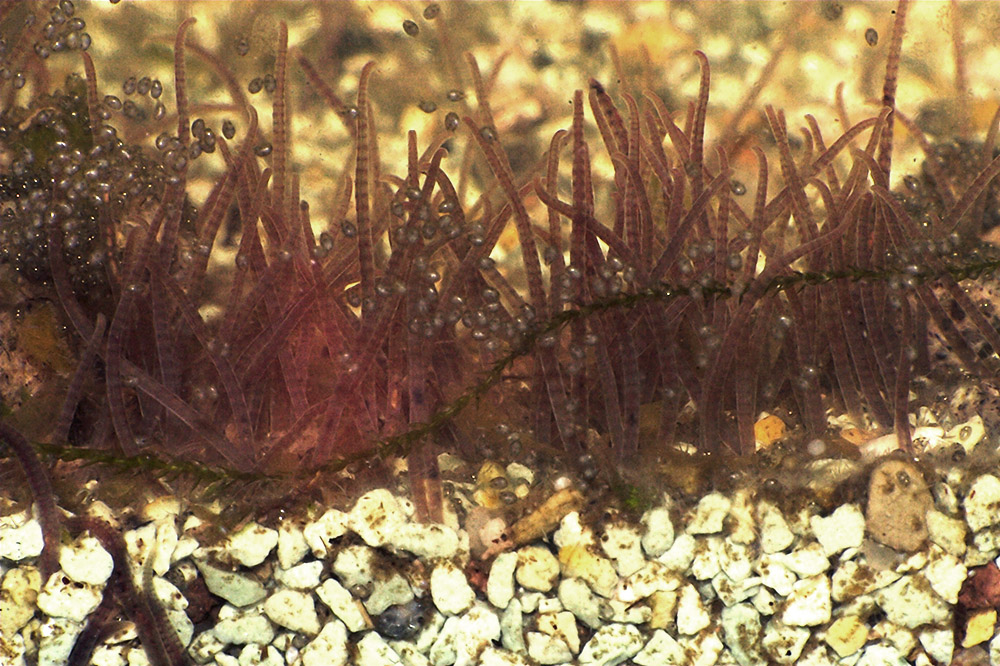
Thus, the soil-dwelling model organisms mud tube worm (see picture), shrimp, earth worm and basket shells were investigated. In this study, only the shrimp showed an impairment of growth and survival at very high, not environmentally relevant concentrations of nanoscale Al2O3. Regarding the uptake of alumina particles, large differences both between organisms and between nano-and microscale Al2O3 were observed.
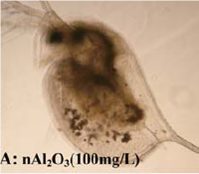
For a nematode Al2O3 was toxic, as demonstrated by growth inhibition and reduction of reproduction. Here nanoparticles acted stronger than coarser particles. Interestingly, for aluminum salt an even higher toxicity than for the nanoparticles had been detected. An earthworm exposed to Al2O3 in the ground for 4 weeks shows no increased mortality, even in very high, not environmentally relevant concentrations. The worms, however, were impaired in their propagation. Nanoscale alumina has no strong antimicrobial properties. The metabolic activity of bacteria was not influenced by Al2O3 particles. Very high particle concentrations, which are not expected to occur in the environment, caused a slight reduction in bacterial growth by an interaction with the bacterial surface. In contrast, there are results that show a growth inhibition of different bacterial species also at lower particle concentrations [7,8]. Moreover, a stronger effect of the nanoparticles compared with larger particles was observed here. Nanoscale Al2O3 induces no mutagenic effects. Daphnia responded to exposure to very high concentrations of Al2O3 nanoparticles with reduced mobility and increased mortality. As shown in the figure, the water fleas internalise nanoparticles from the water in the intestine. An increased sensitivity towards nanoscale compared to microscale particles was observed.
For embryos and larvae of zebrafish, however, neither nano- nor microscale particles were toxic. Several plants, such as the California Kidney bean and ryegrass showed a normal growth in the presence of nanoparticulate Al2O3. Kidney beans internalise no particles from the soil into the leaves, while the aluminum concentration in the leaves of the ryegrass approximately doubled. Also, no toxic effects of aluminum oxide on germination, root growth and leaf number of the thale cress (Arabidopsis) were observed. Corn, carrots, soy, cabbage and cucumber showed a reduced root growth in the presence of Al2O3. Interestingly, this effect disappeared when the particles were previously loaded with phenanthrene. It is speculated, that the phenanthrene changed certain surface properties of the particles so that they are no longer toxic. In another study, however, radish, rapeseed, rye, lettuce, corn and cucumber were not affected in germination and root growth. No toxicity was observed in algae. The risk posed by Al2O3 nanoparticles for environmental organisms is considered to be low. Because of little or no toxicity, often no differences between nano-and microscale particles are observed. If, however, a stronger toxic effect occurs, this is more pronounced for nanoscale than for micro-scale particles .
Both aluminium particles and aluminium oxide particles are incorporated into cells. If they are not stabilised with additives, they tend to agglomerate.
Behaviour at the Blood-Brain Barrier
Animal experiments on mice and rats were carried out to investigate the permeability of the blood-brain barrier. Very high doses of Aluminium particles were administered via the carotid artery, into the veins, the abdomen, and the hollow spaces of the brain of the test animals. Since the experimental doses cannot be compared with the realistic doses, the results must be judged with caution. So far, relevant Aluminium nanoparticle doses have not been proven to cause neurotoxicity .
Behaviour of Uptake in somatic cells
The agglomerates, which can also be taken up in the cells, are found in vesicles, i.e. they do not occur freely in the cells and are practically never detected in the cell nucleus. The agglomerated particles can be detected by means of electron microscopy in the cell inclusions. The vesicle membrane protects the remaining cell components from the particles .
Few studies have examined the behavior of engineered aluminum nanoparticles in the environment. Generally, the solubility of these particles is considered to be low, i.e. only a few ions dilute from the particles in aqueous solution. Under acidic conditions, however, increases the solubility, and more ions get into soil or water. Ions were described as toxic to the roots of crops.
In soils aluminum particles are mobile, but at low, acidic pH values the mobility is significantly higher. In the presence of natural organic material more particles remain in the solution, i.e. the organic material influences the stability of a suspension of Al2O3.
Studies on the binding behaviour of various chemicals by nanoscale Al2O3 showed that different amounts were bound and toxicity of these chemicals is thus rather decreased. At the same time, the binding of organic material from soil or water to Al2O3 particles increases the amount of bound chemicals (such as phenanthrene), compared with organic material alone or particles alone. The effects of particle-bound chemicals on environmental organisms are not yet fully understood. However, note that the binding of organic matter on natural aluminum particles also occurs .
Griffitt, R.J.; Luo, J.; Gao, J.; Bonzongo, J.C.; Barber, D.S. Effects of Particle Composition and Species on Toxicity of Metallic Nanomaterials in Aquatic Organisms. Environmental toxicology and chemistry / SETAC2008, 27, 1972–1978, https://doi.org/10.1897/08-002.1.
1.
Wang, H.; Wick, R.L.; Xing, B. Toxicity of Nanoparticulate and Bulk ZnO, Al2O3 and TiO2 to the Nematode Caenorhabditis Elegans. Environmental pollution2009, 157, 1171–1177, https://doi.org/10.1016/j.envpol.2008.11.004.
1.
Bruch, J.; Rehn, S.; Rehn, B.; Borm, P.J.; Fubini, B. Variation of Biological Responses to Different Respirable Quartz Flours Determined by a Vector Model. International Journal of Hygiene and Environmental Health2004, 207, 203–216, https://doi.org/10.1078/1438-4639-00278.
1.
Tiede, K.; Hassellov, M.; Breitbarth, E.; Chaudhry, Q.; Boxall, A.B. Considerations for Environmental Fate and Ecotoxicity Testing to Support Environmental Risk Assessments for Engineered Nanoparticles. Journal of chromatography. A2009, 1216, 503–509, https://doi.org/10.1016/j.chroma.2008.09.008.
Organisation for Economic Co-operation and Development (OECD) Test No. 404: Acute Dermal Irritation/Corrosion, OECD Guidelines for the Testing of Chemicals, Section 4, OECD Publishing, Paris. ISBN 978-92-64-24267-8. Available online: https://doi.org/10.1787/9789264242678-en.
1.
Bundesanstalt für Arbeitsschutz und Arbeitsmedizin (BAuA); Letzel, S. Arbeitsmedizinische Untersuchungen zur Belastung und Beanspruchung in der aluminiumpulverherstellenden Industrie. 1. Auflage. Bremerhaven: Wirtschaftsverlag NW Verlag für neue Wissenschaft GmbH 1994. (Schriftenreihe der Bundesanstalt für Arbeitsmedizin: Sonderschrift, S 8), pp.224, ISBN: 3-89429-551-1 Available online: https://www.baua.de/DE/Angebote/Publikationen/Schriftenreihe/Sonderschriften/S8.html.
World Health Organization (WHO); Joint FAO/WHO Expert Committee on Food Additives Food and Agriculture Organization of the United Nations Evaluation of Certain Food Additives and Contaminants : Thirty-Third Report of the Joint FAO/WHO Expert Committee on Food Additives [meeting Held in Geneva from 21 to 30 March 1988]. World Health Organization Technical Report Series ; No. 776, ISBN 9241207760 Available online: https://apps.who.int/iris/handle/10665/39252 (accessed on 16 June 2012).
Velzeboer, I.; Hendriks, A.J.; Ragas, A.M.; Van de Meent, D. Aquatic Ecotoxicity Tests of Some Nanomaterials. Environmental toxicology and chemistry / SETAC2008, 27, 1942–1947, https://doi.org/10.1897/07-509.1.
1.
Hu, X.; Cook, S.; Wang, P.; Hwang, H.M. In Vitro Evaluation of Cytotoxicity of Engineered Metal Oxide Nanoparticles. The Science of the total environment2009, 407, 3070–3072, https://doi.org/10.1016/j.scitotenv.2009.01.033.
1.
Harper, S.; Usenko, C.; Hutchison, J.E.; Maddux, B.L.S.; Tanguay, R.L. In Vivobiodistribution and Toxicity Depends on Nanomaterial Composition, Size, Surface Functionalisation and Route of Exposure. Journal of Experimental Nanoscience2008, 3, 195–206, https://doi.org/10.1080/17458080802378953.
1.
Yang, K.; Zhu, L.; Xing, B. Sorption of Phenanthrene by Nanosized Alumina Coated with Sequentially Extracted Humic Acids. Environ Sci Pollut Res2010, 17, 410–419, https://doi.org/10.1007/s11356-009-0163-z.
1.
Zhu, X.; Zhu, L.; Duan, Z.; Qi, R.; Li, Y.; Lang, Y. Comparative Toxicity of Several Metal Oxide Nanoparticle Aqueous Suspensions to Zebrafish (Danio Rerio) Early Developmental Stage. Journal of Environmental Science and Health, Part A2008, 43, 278–284, https://doi.org/10.1080/10934520701792779.
1.
Zhu, X.; Zhu, L.; Chen, Y.; Tian, S. Acute Toxicities of Six Manufactured Nanomaterial Suspensions to Daphnia Magna. J Nanopart Res2009, 11, 67–75, https://doi.org/10.1007/s11051-008-9426-8.
1.
Yang, L.; Watts, D.J. Particle Surface Characteristics May Play an Important Role in Phytotoxicity of Alumina Nanoparticles. Toxicology Letters2005, 158, 122–132, https://doi.org/10.1016/j.toxlet.2005.03.003.
1.
Wagner, A.J.; Bleckmann, C.A.; Murdock, R.C.; Schrand, A.M.; Schlager, J.J.; Hussain, S.M. Cellular Interaction of Different Forms of Aluminum Nanoparticles in Rat Alveolar Macrophages. J. Phys. Chem. B2007, 111, 7353–7359, https://doi.org/10.1021/jp068938n.
1.
Stanley, J.K.; Coleman, J.G.; Weiss, C.A.; Steevens, J.A. Sediment Toxicity and Bioaccumulation of Nano and Micron-Sized Aluminum Oxide. Environmental Toxicology and Chemistry2010, 29, 422–429, https://doi.org/10.1002/etc.52.
1.
Simon-Deckers, A.; Gouget, B.; Mayne-L’hermite, M.; Herlin-Boime, N.; Reynaud, C.; Carrière, M. In Vitro Investigation of Oxide Nanoparticle and Carbon Nanotube Toxicity and Intracellular Accumulation in A549 Human Pneumocytes. Toxicology2008, 253, 137–146, https://doi.org/10.1016/j.tox.2008.09.007.
1.
Tsaousi, A.; Jones, E.; Case, C.P. The in VitroGenotoxicity of Orthopaedic Ceramic (Al2O3) and Metal (CoCr Alloy) Particles. Mutation Research/Genetic Toxicology and Environmental Mutagenesis2010, 697, 1–9, https://doi.org/10.1016/j.mrgentox.2010.01.012.
1.
Oberdörster, G.; Elder, A.; Rinderknecht, A. Nanoparticles and the Brain: Cause for Concern? j nanosci nanotechnol2009, 9, 4996–5007, https://doi.org/10.1166/jnn.2009.gr02.
1.
Sadiq, I.M.; Chowdhury, B.; Chandrasekaran, N.; Mukherjee, A. Antimicrobial Sensitivity of Escherichia Coli to Alumina Nanoparticles. Nanomedicine: Nanotechnology, Biology and Medicine2009, 5, 282–286, https://doi.org/10.1016/j.nano.2009.01.002.
1.
Ra, J.S.; Oh, S.-Y.; Lee, B.C.; Kim, S.D. The Effect of Suspended Particles Coated by Humic Acid on the Toxicity of Pharmaceuticals, Estrogens, and Phenolic Compounds. Environment International2008, 34, 184–192, https://doi.org/10.1016/j.envint.2007.08.001.
1.
Sharma, H.S.; Ali, S.F.; Hussain, S.M.; Schlager, J.J.; Sharma, A. Influence of Engineered Nanoparticles from Metals on the Blood-Brain Barrier Permeability, Cerebral Blood Flow, Brain Edema and Neurotoxicity. An Experimental Study in the Rat and Mice Using Biochemical and Morphological Approaches. j nanosci nanotechnol2009, 9, 5055–5072, https://doi.org/10.1166/jnn.2009.gr09.
1.
Pauluhn, J. Retrospective Analysis of 4-Week Inhalation Studies in Rats with Focus on Fate and Pulmonary Toxicity of Two Nanosized Aluminum Oxyhydroxides (Boehmite) and Pigment-Grade Iron Oxide (Magnetite): The Key Metric of Dose Is Particle Mass and Not Particle Surface Area. Toxicology2009, 259, 140–148, https://doi.org/10.1016/j.tox.2009.02.012.
1.
Pan, X.; Redding, J.E.; Wiley, P.A.; Wen, L.; McConnell, J.S.; Zhang, B. Mutagenicity Evaluation of Metal Oxide Nanoparticles by the Bacterial Reverse Mutation Assay. Chemosphere2010, 79, 113–116, https://doi.org/10.1016/j.chemosphere.2009.12.056.
1.
Pauluhn, J. Pulmonary Toxicity and Fate of Agglomerated 10 and 40 Nm Aluminum Oxyhydroxides Following 4-Week Inhalation Exposure of Rats: Toxic Effects Are Determined by Agglomerated, Not Primary Particle Size. Toxicological Sciences2009, 109, 152–167, https://doi.org/10.1093/toxsci/kfp046.
1.
Lin, D.; Xing, B. Phytotoxicity of Nanoparticles: Inhibition of Seed Germination and Root Growth. Environmental Pollution2007, 150, 243–250, https://doi.org/10.1016/j.envpol.2007.01.016.
1.
Monteiro-Riviere, N.A.; Oldenburg, S.J.; Inman, A.O. Interactions of Aluminum Nanoparticles with Human Epidermal Keratinocytes. J. Appl. Toxicol.2010, 30, 276–285, https://doi.org/10.1002/jat.1494.
1.
Lee, C.W.; Mahendra, S.; Zodrow, K.; Li, D.; Tsai, Y.-C.; Braam, J.; Alvarez, P.J.J. Developmental Phytotoxicity of Metal Oxide Nanoparticles to Arabidopsis Thaliana. Environ Toxicol Chem2010, 29, 669–675, https://doi.org/10.1002/etc.58.
1.
Kraus, T.; Schaller, K.H.; Angerer, J.; Letzel, S. Aluminium Dust-Induced Lung Disease in the Pyro-Powder-Producing Industry: Detection by High-Resolution Computed Tomography. Int Arch Occup Environ Health2000, 73, 61–64, https://doi.org/10.1007/pl00007939.
1.
Kim, I.-S.; Baek, M.; Choi, S.-J. Comparative Cytotoxicity of Al2O3, CeO2, TiO2 and ZnO Nanoparticles to Human Lung Cells. J. Nanosci. Nanotech.2010, 10, 3453–3458, https://doi.org/10.1166/jnn.2010.2340.
1.
Jiang, W.; Mashayekhi, H.; Xing, B. Bacterial Toxicity Comparison between Nano- and Micro-Scaled Oxide Particles. Environmental Pollution2009, 157, 1619–1625, https://doi.org/10.1016/j.envpol.2008.12.025.
1.
JENG, H.A.; SWANSON, J. Toxicity of Metal Oxide Nanoparticles in Mammalian Cells. Journal of Environmental Science and Health, Part A2006, 41, 2699–2711, https://doi.org/10.1080/10934520600966177.
1.
Ghosh, S.; Mashayekhi, H.; Pan, B.; Bhowmik, P.; Xing, B. Colloidal Behavior of Aluminum Oxide Nanoparticles as Affected by pH and Natural Organic Matter. Langmuir2008, 24, 12385–12391, https://doi.org/10.1021/la802015f.
1.
Coleman, J.G.; Johnson, D.R.; Stanley, J.K.; Bednar, A.J.; Weiss, C.A.; Boyd, R.E.; Steevens, J.A. Assessing the Fate and Effects of Nano Aluminum Oxide in the Terrestrial Earthworm, Eisenia Fetida. Environmental Toxicology and Chemistry2010, 29, 1575–1580, https://doi.org/10.1002/etc.196.
1.
Doshi, R.; Braida, W.; Christodoulatos, C.; Wazne, M.; O’Connor, G. Nano-Aluminum: Transport through Sand Columns and Environmental Effects on Plants and Soil Communities. Environmental Research2008, 106, 296–303, https://doi.org/10.1016/j.envres.2007.04.006.
1.
Davis, J.A.; Gloor, R. Adsorption of Dissolved Organics in Lake Water by Aluminum Oxide. Effect of Molecular Weight. Environ. Sci. Technol.1981, 15, 1223–1229, https://doi.org/10.1021/es00092a012.