
The biological effect of materials or substances depends on their ability of reaching the body or rather the organs and cells inside the body. Detection of the uptake in the respective organism is an essential factor in evaluating innovative materials or nanoparticles. Like in the case of other substances, nanomaterials are taken up depending on how they occur in the environment: as free particles, bound in another substance e.g., as reinforcements in plastics; distributed in a liquid e.g., as constituents of lubricants or oils.
Basically, there are three pathways for all substances, including free nanoparticles, to get into the human body
- via the air during inhalation – inhalative uptake
- via the digestive tract – oral uptake
- via the skin – dermal uptake
Once the particles have reached the bloodstream, they already bypassed the “classical barriers”. In this context, new and so far unaffected tissue barrier tissues are becoming more important, e.g., the placental barrier between mother and child.
In principle, the same conditions apply for the uptake of nanoparticles to humans and environmental organisms.
Inhalative Uptake
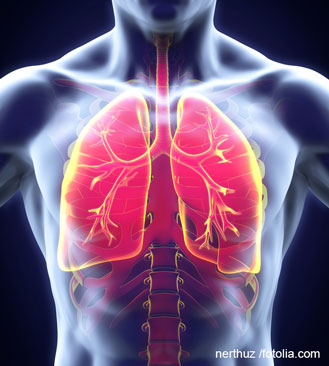
Nanoparticles are very lightweight particles that do not deposit easily and rather tend to remain in the air. In view of many experts, the lung, therefore, is the main uptake organ. Basically, finest particles can get through to the deepest regions of the lung to reach the alveoli. As a basic rule all particles smaller than 3 µm in diameter – that is 20 times smaller than the diameter of a human hair, rank among the finest particles. Since this is the part of the lung where the vital gas exchange takes place, deposition of airborne particles in that area can be problematic depending on the dose that has been taken up.
For further information, see Body Barriers: “Nanoparticles and the lung“
Oral Uptake
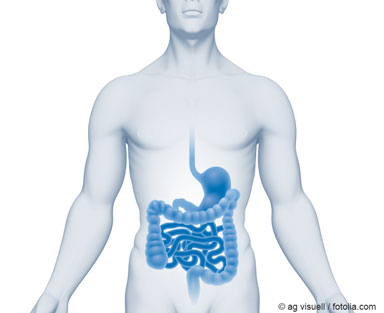
Any substance that is not needed by the body is transported to the bowels to be disposed of before reaching any other parts of the body. Consequently, particles that are taken up via the food are excreted via the stool.
There are three large body barriers: The skin, the lung, and the mucous membrane of the bowels. Nanoparticles of natural or synthetic origin are basically assumed to be able to overcome the intestinal barrier. The transport rate or bioavailability is rated very low (rarely more than 1% of the respective dose). However, it may increase due to inflammatory diseases that disturb the function of the intestinal barrier.
Dermal Uptake
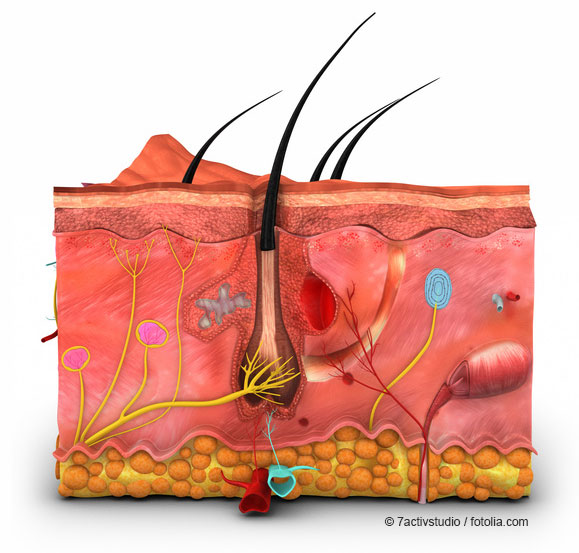
Substances can also be taken up through the skin, for example through drug patches. The skin, therefore, is another gate though which nanoparticles may enter.
More than ten years ago the European research project NANODERM has investigated these issues comprehensively and has analysed nanostructured titanium dioxide and zinc oxide that are used in many suncreen products as inorganic (also called mineral) UV-blockers. The two oxides as well as the organic UV-blockers MBBT and TBPT, which are present as nanoparticles, are incorporated in the sunscreen as protection against carcinogenic UV light. The project NANODERM but many follow-up projects too have shown that in spite of the smallness of the particles or agglomerates, the skin is a very good barrier that leaves no particles/agglomerates through to the deeper layers. Since the skin is covered with up to twelve layers of dead corneal cells, no living cells can come into contact with the nanostructured particles.
For further information, see Body Barriers: “Nanoparticles and the Skin”
Uptake through the placenta
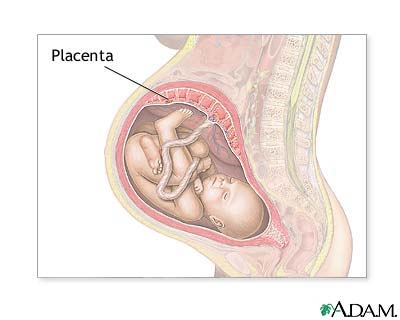
The placental tissue is a tightly regulated tissue, which regulates the gas exchange between mother and the foetus and keeps the two circulations separated from each other.
First indications that nano-sized materials may cross the placental tissue came from animal studies done with mice or rats. However, these data cannot be extrapolated to humans because anatomy and physiology of the human placenta are unique. With the human ex vivo placenta perfusion model a controlled system for studying the transplacental transport was shown that nanoparticles may have the potential to cross the human placental barrier. The underlying mechanism how the particles find their way across the human placenta is still part of the on-going research.
For further information, see Body Barriers:“Nanoparticles at the placental barrier“
Uptake – Environmental Organisms
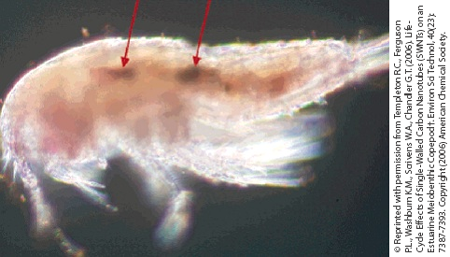
In principle, the same conditions apply for the uptake of innovative materials or nanoparticles to humans and environmental organisms but because of their diversity of there are much more possibilities for an uptake by organisms. Thus, additional routes like gills, the respiratory organs of aquatic organisms, must be taken into account. Depending on the preferred habitat of the organism particles are absorbed from the water, the soil, or the air. Crucially, the size of the organism also determines what size range of particles can be ingested. For example, a water flea will simply not take in 5 mm particles, whereas this is no problem for a pike.
It has been detected in laboratory experiments that pumpkin plants can absorb nanoparticles from the water through their roots. Moreover, when small crabs were held in water containing carbon nanotubes, bundles of these nanotubes became apparent in their digestive tract after some time. There is also some evidence that nanoparticles can be harmful without being taken up into a cell, so for example on bacteria.